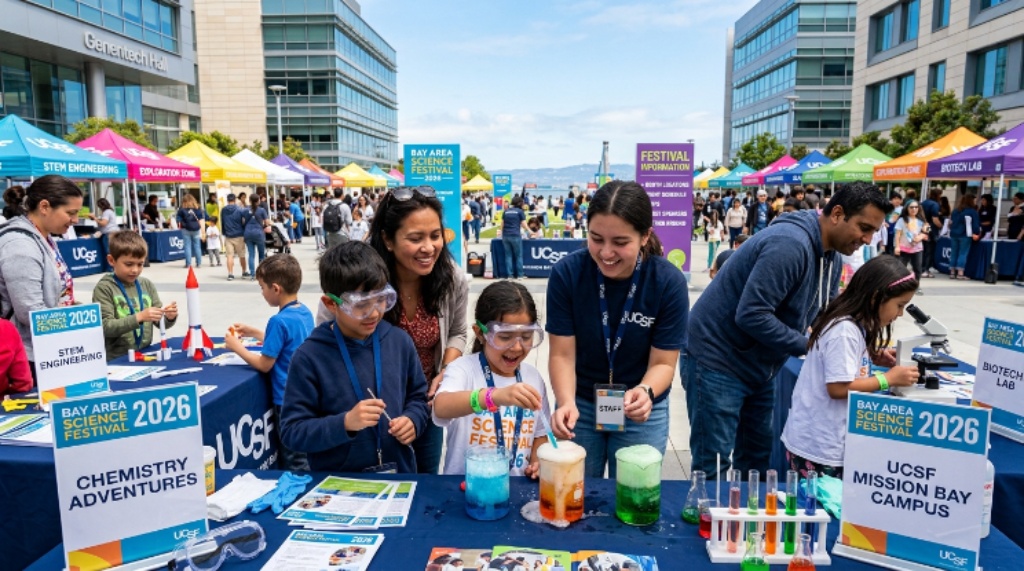
The Bay Area Science Festival is one of the most exciting annual gatherings in Northern California. It brings together curious minds of all ages to explore, question, and celebrate the world around them. Whether you are a parent looking for a fun day out, a student eager to meet real scientists, or simply someone who loves learning, this event has something special for you.
This guide covers everything you need to know for the 2026 edition — from dates and location to activities, tips, and how to make the most of your visit.
What Is the Bay Area Science Festival?
The Bay Area Science Festival is organized by the Science and Health Education Partnership (SEP) at the University of California, San Francisco (UCSF). It is a free, community-centered celebration of science, technology, engineering, and math — commonly known as STEM.
The festival began more than a decade ago and has grown into one of Northern California’s largest free science events. It draws thousands of visitors each year. Additionally, it serves as a bridge between the region’s world-class research institutions and the everyday public.
Each year, UCSF partners with Bay Area universities, museums, cultural institutions, research labs, libraries, corporations, government agencies, and after-school groups to put on a vibrant day of programming. Therefore, the event reflects the rich scientific community that makes the Bay Area uniquely suited to host it.
Bay Area Science Festival 2026: Key Details at a Glance
Here is a quick overview of the essential facts for the 2026 edition:
| Detail | Information |
| Event Name | Bay Area Science Festival 2026 |
| Edition | 13th Annual |
| Date | Saturday, October 17, 2026 |
| Time | 11:00 AM – 4:00 PM |
| Venue | UCSF Mission Bay Campus, Koret Quad |
| Admission | Free |
| Organizer | UCSF Science and Health Education Partnership (SEP) |
| Contact Email | info@bayareasciencefestival.org |
| Website | bayareasciencefestival.org |
As you can see, admission is completely free. However, organizers welcome and strongly encourage donations, as producing the event costs hundreds of thousands of dollars each year.
When and Where Is the 2026 Festival?
Mark your calendar for Saturday, October 17, 2026. The gates open at 11:00 AM and programming runs through 4:00 PM, giving you a full five hours to explore.
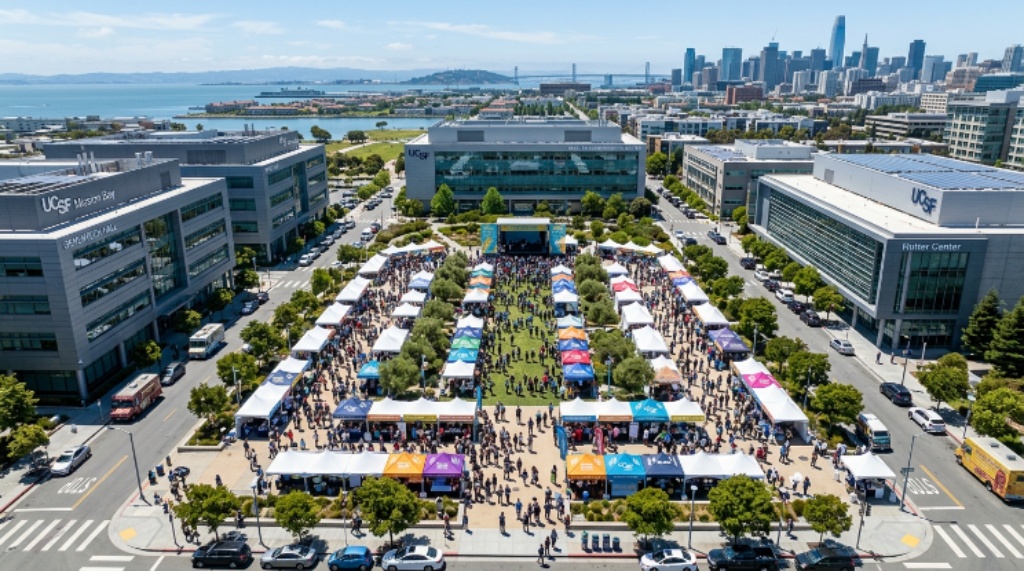
The event takes place at the UCSF Mission Bay Campus, specifically in Koret Quad. This modern, open campus offers plenty of space for the festival’s more than 125 exhibits, demonstrations, and activities. San Francisco’s public transit system connects the Mission Bay neighborhood well to the rest of the city, making it easy to reach.
If you are driving, plan ahead. Parking near UCSF Mission Bay can be limited on busy event days. Therefore, taking Muni, BART, or a rideshare service is often the smarter choice.
What to Expect: Activities and Experiences
The 2026 festival promises to be one of the biggest yet. With over 125 experiences planned across the venue, there is truly something for everyone. Below is a breakdown of the types of activities you can look forward to.
Hands-On Science Demonstrations
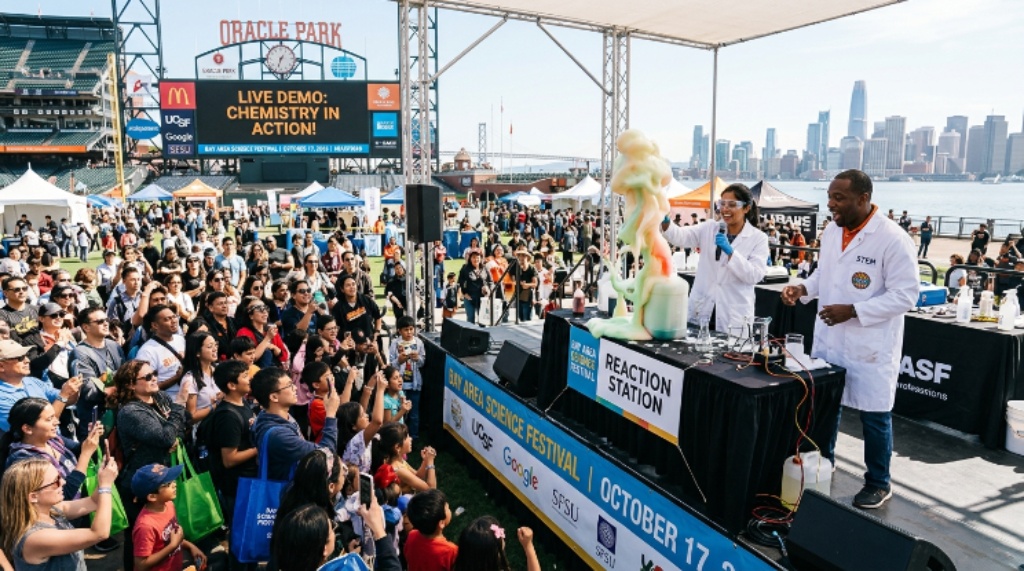
Live demonstrations are at the heart of the festival. Visitors can watch and participate in experiments that cover biology, chemistry, physics, astronomy, engineering, and more. These are not passive presentations — you get to touch, test, and try things yourself.
Behind-the-Scenes Lab Tours
One of the most popular features is access to working research labs. Normally off-limits to the public, these spaces give visitors a real glimpse into how scientific discoveries are made. You can speak directly with researchers and ask them about their work.
Science Talks and Stage Presentations
Throughout the day, scientists and STEM professionals take the stage to share their stories and discoveries. These talks are designed to be engaging and accessible. They are suitable for both adults and younger audiences.
Interactive Games and Challenges
Science does not have to feel serious. The festival includes astounding games that make learning feel like play. Children especially love these hands-on challenges, which test problem-solving and creativity alongside scientific thinking.
Film Screenings
Science-themed short films add another dimension to the experience. These screenings give visitors a chance to slow down, sit, and discover science through the power of storytelling and visuals.
Meet STEM Role Models
One of the most valuable aspects of the festival is the opportunity to meet real scientists, engineers, doctors, and researchers. For young people especially, seeing professionals who look like them and hearing their personal journeys can be incredibly inspiring.
Who Should Attend?
The short answer: everyone. The festival welcomes families, students, educators, science enthusiasts, and professionals alike.
| Audience | Why It Is Perfect for Them |
| Families with children | Safe, free, and packed with hands-on fun |
| Students (K–12) | Inspiring STEM role models and real lab experiences |
| College students | Networking with researchers and institutions |
| Educators | Ideas and resources for science education |
| Adults and seniors | Engaging talks, tours, and demonstrations |
| Science enthusiasts | Deep-dive access to cutting-edge research |
There is no age limit for curiosity. Additionally, the festival is designed with accessibility in mind. UCSF welcomes everyone to its events. If you or a family member needs a reasonable accommodation due to a disability, you can reach out to the festival team at info@bayareasciencefestival.org as early as possible.
Is the Festival Really Free? What About Tickets?
Yes, entry to the Bay Area Science Festival is free. You do not need to purchase a ticket in advance to attend the main event on October 17, 2026.
However, some individual activities or lab tours may require prior registration depending on capacity limits. Therefore, it is a good idea to check the official website at bayareasciencefestival.org as the date approaches. Details on specific activities and any registration requirements will be announced closer to October.
Although admission is free, the organizers raise hundreds of thousands of dollars each year to make the event possible. If you enjoy the experience, consider making a donation. As part of UCSF, the Science and Health Education Partnership is a registered 501(c)(3) nonprofit. All donations are tax-deductible to the fullest extent of the law.
Getting to UCSF Mission Bay Campus
The UCSF Mission Bay Campus sits in one of San Francisco’s newer neighborhoods, making it easy to reach from many parts of the city.
| Transportation Option | Details |
| Muni Light Rail (T-Third) | Stops near the campus; very convenient |
| BART | Nearest station is 16th Street Mission; transfer to Muni |
| Rideshare (Uber/Lyft) | Drop-off directly at the campus entrance |
| Bicycle | Bike lanes available; bike parking on campus |
| Driving | Limited parking; plan ahead and arrive early |
Public transit is strongly recommended. The T-Third Street light rail line runs directly through Mission Bay and drops passengers close to the campus. This means you can skip the parking headache altogether and simply enjoy the day.
Tips for Making the Most of Your Visit
A little planning goes a long way. Here are some practical tips to help your festival day run smoothly.
- Arrive close to the 11:00 AM opening time to avoid crowds and get first access to popular tours and activities.
- Wear comfortable shoes. The festival spans a large outdoor quad, and you will be on your feet most of the day.
- Bring sunscreen and a light jacket. October in San Francisco can be sunny but cool, especially in the afternoon.
- Download a map of the venue from the official website before you arrive so you can plan your route through the exhibits.
- If you have young children, pick a meeting point at the start of the day in case anyone gets separated.
- Stay hydrated. Bring a reusable water bottle, as there are typically water stations on site.
- Charge your phone the night before so you can take photos, look up information, and stay connected throughout the day.
Who Organizes the Festival?
The Science and Health Education Partnership (SEP) at UCSF has organized the Bay Area Science Festival since its founding. SEP’s mission is to inspire future scientists by connecting UCSF researchers with local K–12 students and the broader public.
A wide network of collaborators makes the festival possible. These include Bay Area universities, science museums, cultural institutions, public libraries, corporations, research laboratories, and government agencies. Together, they pool resources to create an event that reflects the full breadth of scientific work happening across the region.
Major sponsors for past editions have included UCSF itself and the Gordon and Betty Moore Foundation. The 2026 sponsor lineup will be confirmed closer to the event date. Businesses and organizations interested in sponsoring can learn more at bayareasciencefestival.org/sponsor.
Why the Bay Area Is the Perfect Home for This Festival
The San Francisco Bay Area is one of the world’s leading science and technology hubs. It is home to world-renowned research universities, biotech companies, engineering firms, and innovation centers. Therefore, it makes perfect sense that the region hosts an event like this.
The people and institutions shaping the future surround the Bay Area, from Silicon Valley to the university campuses of San Francisco and Berkeley. The festival brings that science out of the labs and into the hands of the community. It makes cutting-edge discovery feel accessible, relevant, and exciting for everyone.
Volunteering and Getting Involved
If you are passionate about science and want to do more than just attend, you can get involved in several ways at the festival.
- Volunteer: Help run the event, guide visitors, and support exhibitors on October 17.
- Exhibit: If you represent a research group, university department, or science-focused organization, you can apply to host a booth or demonstration.
- Present on Stage: Scientists and STEM professionals can apply to give a talk or demonstration to the crowd.
- Sponsor: Businesses can support the event financially and gain visibility among a highly engaged, science-minded audience.
Visit bayareasciencefestival.org to learn more about each of these opportunities.
Conclusion
The Bay Area Science Festival 2026 is set to be a landmark event. Taking place on Saturday, October 17, 2026, from 11:00 AM to 4:00 PM at UCSF Mission Bay Campus, the 13th edition of this beloved gathering promises over 125 experiences for visitors of all ages. Best of all, it is completely free to attend.
The day offers hands-on experiments, lab tours, science talks, and games, giving visitors plenty of opportunities to learn, explore, and find inspiration. The festival reflects the Bay Area’s deep commitment to science and its belief that discovery belongs to everyone — not just those inside the lab.
Whether you are bringing a family, planning a school outing, or just looking for something meaningful to do on a Saturday, this event delivers. Save the date, plan your route, and prepare to spend a day celebrating the wonder of science.
Frequently Asked Questions (FAQs)
When is the Bay Area Science Festival 2026?
The festival takes place on Saturday, October 17, 2026, from 11:00 AM to 4:00 PM.
Where is the Bay Area Science Festival 2026 held?
UCSF holds the event at Koret Quad on the UCSF Mission Bay Campus in San Francisco, California.
Do I need to buy tickets for the Bay Area Science Festival?
No. General admission to the festival is free. Some specific activities or lab tours may require advance registration due to limited capacity. Check the official website at bayareasciencefestival.org for updates.
Is the Bay Area Science Festival suitable for young children?
Absolutely. The festival is designed for all ages, including young children. Hands-on activities, games, and demonstrations are all family-friendly and accessible to kids.
How can I support the Bay Area Science Festival?
You can donate through the official UCSF giving portal. Since UCSF SEP is a registered 501(c)(3) nonprofit, all donations are tax-deductible. You can also volunteer, exhibit, sponsor, or spread the word to support the event.