
Online education has come a long way. What started as simple video lectures and downloadable PDFs has grown into something far more exciting. Today, educators and platform developers are rethinking how people learn online. The goal is no longer just to deliver information. It is to create experiences that stick.
Immersive learning is at the center of this shift. It brings learners into environments where they do not just read about a concept — they experience it. This approach changes how students engage, retain, and apply knowledge. If you run or develop an e-learning platform, understanding these approaches can help you stay relevant and competitive.
Why Traditional E-Learning Falls Short
Most online learners have felt it at some point. You open a course, watch a video, click through a few slides, and then take a quiz. It works, but it rarely excites. Studies consistently show that passive learning leads to low retention rates. In fact, research suggests that people remember only about 10% of what they read but up to 75% of what they practice and apply.
Traditional formats also struggle with engagement. Learners drop off. Completion rates for online courses are notoriously low, often falling below 15%. The structure feels disconnected from real-world application. Therefore, platforms that want to deliver genuine value must look beyond the standard model.
What Immersive Learning Actually Means
Immersive learning is not a single tool or technology. It is a design philosophy. It places the learner inside the content rather than in front of it. The learner becomes an active participant rather than a passive observer.
This can take many forms. Some platforms use virtual reality to simulate real-world environments. Others rely on scenario-based learning, where students make decisions and face consequences. Gamification adds points, badges, and challenges to motivate progress. Each approach shares a common thread — the learner is involved, not just informed.
Additionally, immersive learning works across many subjects. Medical students can practice procedures in safe virtual environments. Sales teams can rehearse customer conversations. Engineers can walk through building designs before a single brick is laid. The applications are nearly limitless.
Using Scenario-Based Learning to Build Critical Thinking
Scenario-based learning is one of the most accessible forms of immersive design. It does not require expensive technology. Instead, it relies on storytelling and decision-making.
In a typical scenario, the learner takes on a role. They might be a manager dealing with a team conflict or a nurse triaging patients in an emergency room. Each choice they make leads to a different outcome. This mirrors how real life works. Decisions have consequences, and learning happens through experience.
To add this to your platform, start with your existing content. Identify areas where learners need to apply judgment rather than just recall facts. Then build branching stories around those moments. Keep the language simple and the choices realistic. Learners should feel like they are solving a real problem, not taking a test.
Scenario-based modules also boost emotional engagement. When a learner feels invested in an outcome, they pay closer attention. They are more likely to revisit a module to see what happens with a different choice. This replays content naturally and reinforces learning without feeling repetitive.
Gamification: Making Progress Feel Rewarding
Gamification is one of the most well-known tools in the e-learning world. However, it is often misunderstood. Slapping a badge onto a course completion does not make it a game. True gamification ties rewards to meaningful actions and creates a sense of progression.
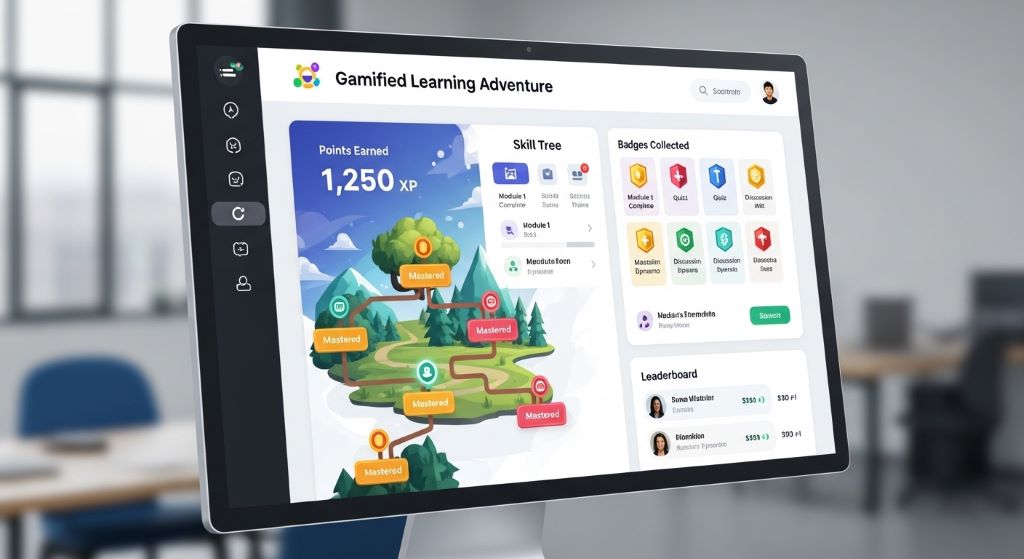
Effective gamification includes several elements. Points and leaderboards create healthy competition. Levels and unlockable content give learners something to work toward. Streaks and daily challenges build habits. Feedback loops tell learners how they are doing and what to improve.
Here are a few practical ways to apply gamification on your platform:
- Create skill trees that show learners what they have mastered and what comes next.
- Add time-based challenges that encourage learners to think quickly.
- Use narrative arcs that tie individual lessons to a bigger story or mission.
- Reward collaboration by giving bonuses when learners help peers in discussion forums.
- Allow learners to customize their profiles or avatars as they advance.
When done well, gamification transforms a course into an ongoing journey. Learners come back not just because they have to, but because they want to see what is next.
Virtual Reality and Simulations for Deep Skill Building
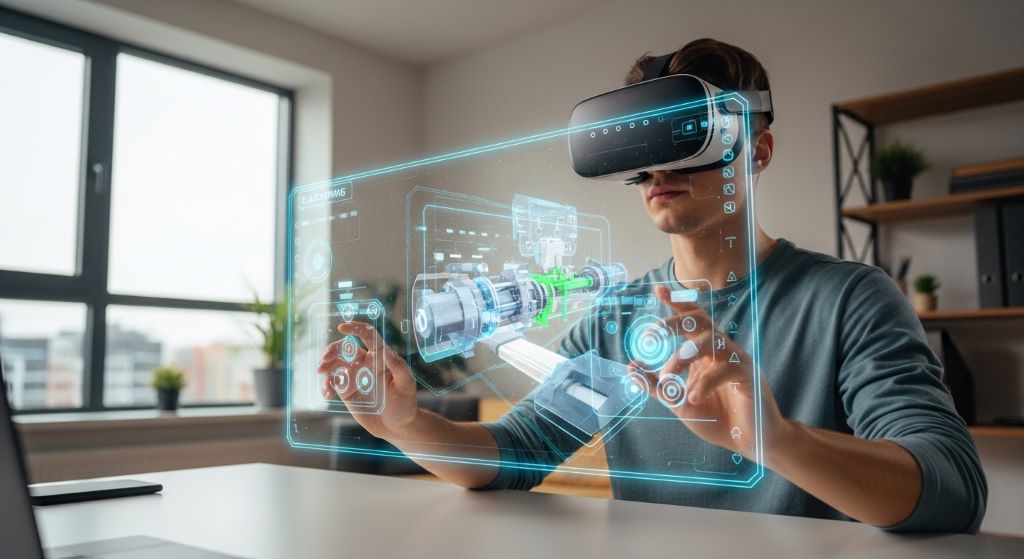
Virtual reality (VR) represents the most immersive end of the spectrum. It creates fully simulated environments where learners can practice skills as if they were truly there. While VR hardware is still not universal, its cost has dropped significantly, and many platforms now offer browser-based simulations as an alternative.
Simulations are particularly powerful for hands-on professions. Flight simulators have trained pilots for decades. The same logic now applies to healthcare, construction, retail, customer service, and many other fields. A trainee can practice a difficult conversation with a virtual customer dozens of times before ever speaking to a real one.
For platforms that cannot yet invest in full VR, 360-degree video is a strong middle ground. It places learners inside a real environment using standard video. A nursing student, for example, can virtually walk through a hospital ward and observe procedures. The experience is not fully interactive, but it is far more engaging than a static image or a diagram.
Additionally, augmented reality (AR) is emerging as a practical tool for mobile learning. AR overlays digital content onto the real world through a smartphone camera. A technician can point their phone at a machine and see step-by-step repair instructions appear on screen. This kind of just-in-time learning is both immersive and highly practical.
Microlearning and Immersion: A Powerful Combination
One mistake some platforms make is assuming that immersive experiences must be long. In reality, shorter sessions often work better. Microlearning breaks content into small, focused chunks. When combined with immersive design, it becomes very effective.
A five-minute scenario can teach as much as a 30-minute lecture. A quick gamified quiz at the start of a workday can reinforce a key concept without disrupting the learner’s schedule. Short VR simulations can serve as warm-up exercises before a longer training session.
The key is intentional design. Each micro-module should have a clear learning goal. It should feel complete on its own while also connecting to a broader path. Learners should know why they are doing it and what they will gain from it.
Therefore, when building immersive content, think in moments rather than marathons. Design for the learner who has ten minutes between meetings. Make each moment count, and the learning will add up over time.
Social and Collaborative Immersion
Learning does not have to be a solo experience. Social learning is one of the most underused opportunities on e-learning platforms. When learners interact with each other, they gain different perspectives. They challenge each other’s thinking. They teach, and in doing so, they learn more deeply.
Collaborative immersive learning can take many forms. Virtual group projects place teams inside shared environments to solve problems together. Peer review systems ask learners to evaluate each other’s work using structured criteria. Live role-play sessions in virtual rooms allow learners to practice conversations in real time.
Discussion forums, when designed thoughtfully, also contribute to immersion. Instead of asking generic questions, prompt learners to respond to a scenario. Ask them what they would do in a specific situation. Require them to engage with at least two other responses. This turns a passive comment section into an active thinking space.
However, social features require moderation and structure to work well. Without clear prompts and expectations, discussions can go quiet or veer off track. Build guidelines into the platform and use instructor or community moderator support to keep conversations meaningful.
Personalisation as a Form of Immersion
No two learners are exactly alike. They come with different backgrounds, goals, and learning styles. A platform that treats everyone the same is already falling short. Personalisation is therefore one of the most important enhancements a platform can offer.
Adaptive learning technology uses data to adjust the learner’s path in real time. If a learner struggles with a concept, the platform offers more practice. If they master something quickly, they move ahead without wasting time on what they already know. This creates a learning experience that feels tailor-made.
Beyond adaptive content, personalisation also includes learner choice. Allow users to set their own goals. Let them choose the format they prefer — video, text, audio, or interactive. Give them control over their schedule and pacing. When learners feel ownership over their journey, they invest more in it.
Measuring the Impact of Immersive Learning
Implementing immersive learning approaches is only worthwhile if you can measure their impact. Fortunately, most modern platforms come with analytics tools that go well beyond completion rates.
Track engagement metrics like time spent per module, replay rates, and interaction counts. These tell you what is capturing attention. Monitor assessment performance over time to see if knowledge is being retained. Use satisfaction surveys to gather qualitative feedback directly from learners.
Additionally, map learning outcomes to real-world performance where possible. If a sales team completes a simulation-based training, track whether their close rates improve in the following months. This connection between learning and results is the most compelling case you can make for immersive design.
Conclusion
Enhancing e-learning platforms with immersive learning approaches is not just about adding new features. It is about rethinking how online education works. By moving learners from passive observers to active participants, platforms can dramatically improve engagement, retention, and real-world application.
Scenario-based learning builds critical thinking. Gamification creates motivation and momentum. Virtual simulations develop hands-on skills safely. Microlearning makes immersion accessible within busy schedules. Social features deepen understanding through shared experience. Personalisation ensures every learner’s journey feels relevant.
The platforms that will lead the next era of online education are those that commit to these principles. The technology is available. The evidence is strong. The opportunity is real. Start with one immersive element, measure the impact, and build from there.
Frequently Asked Questions
What is immersive learning in e-learning?
Immersive learning is an approach that actively involves the learner in the content through simulations, scenarios, gamification, or virtual environments, rather than simply presenting information for passive consumption.
Do I need expensive technology to apply immersive learning?
No. Many immersive techniques, such as scenario-based learning and gamification, require no special hardware. Browser-based simulations and 360-degree video are also affordable alternatives to full virtual reality setups.
How does immersive learning improve knowledge retention?
Active participation strengthens memory. When learners make decisions, face consequences, and repeat actions in realistic contexts, they encode information more deeply than they would by reading or watching alone.
Can immersive learning work for all subjects?
Yes. While it is especially impactful in skill-based fields like healthcare, engineering, and sales, immersive techniques can be adapted for any subject that benefits from applied thinking and decision-making.
How do I get started with immersive learning on my platform?
Begin by reviewing your existing content and identifying areas where learners need to apply judgment or practice skills. Convert those sections into branching scenarios or interactive exercises. From there, layer in gamification and social features as your capacity grows.
Related Topics:
How to Delete Your Online Book Club Account – A Simple Guide
How to Download Free Textbooks: A Comprehensive Guide
